Reid, A. H., Fanning, T. G., Hultin, J. V. & Taubenberger, J. K. Origin and evolution of the 1918 “Spanish” influenza virus hemagglutinin gene. Proc. Natl Acad. Sci. USA 96, 1651–1656 (1999).
Taubenberger, J. K., Reid, A. H., Krafft, A. E., Bijwaard, K. E. & Fanning, T. G. Initial genetic characterization of the 1918 “Spanish” influenza virus. Science 275, 1793–1796 (1997).
Kawaoka, Y., Krauss, S. & Webster, R. G. Avian-to-human transmission of the PB1 gene of influenza A viruses in the 1957 and 1968 pandemics. J. Virol. 63, 4603–4608 (1989).
Scholtissek, C., Rohde, W., Von Hoyningen, V. & Rott, R. On the origin of the human influenza virus subtypes H2N2 and H3N2. Virology 87, 13–20 (1978).
Novel Swine-Origin Influenza A (H1N1) Virus Investigation Team et al. Emergence of a novel swine-origin influenza A (H1N1) virus in humans. N. Engl. J. Med. 360, 2605–2615 (2009).
Garten, R. J. et al. Antigenic and genetic characteristics of swine-origin 2009 A(H1N1) influenza viruses circulating in humans. Science 325, 197–201 (2009).
Smith, G. J. et al. Origins and evolutionary genomics of the 2009 swine-origin H1N1 influenza A epidemic. Nature 459, 1122–1125 (2009).
Webby, R. J. & Uyeki, T. M. An update on highly pathogenic avian influenza A(H5N1) virus, clade 2.3.4.4b. J. Infect. Dis. 230, 533–542 (2024).
Peacock, T. P. et al. The global H5N1 influenza panzootic in mammals. Nature 637, 304–313 (2025).
Somes, M. P., Turner, R. M., Dwyer, L. J. & Newall, A. T. Estimating the annual attack rate of seasonal influenza among unvaccinated individuals: a systematic review and meta-analysis. Vaccine 36, 3199–3207 (2018).
Hayward, A. C. et al. Comparative community burden and severity of seasonal and pandemic influenza: results of the Flu Watch cohort study. Lancet Respir. Med. 2, 445–454 (2014).
de Courville, C., Cadarette, S. M., Wissinger, E. & Alvarez, F. P. The economic burden of influenza among adults aged 18 to 64: a systematic literature review. Influenza Other Respir. Viruses 16, 376–385 (2022).
Putri, W., Muscatello, D. J., Stockwell, M. S. & Newall, A. T. Economic burden of seasonal influenza in the United States. Vaccine 36, 3960–3966 (2018).
Iuliano, A. D. et al. Estimates of global seasonal influenza-associated respiratory mortality: a modelling study. Lancet 391, 1285–1300 (2018).
Leung, N. H. L. Transmissibility and transmission of respiratory viruses. Nat. Rev. Microbiol. 19, 528–545 (2021).
Biggerstaff, M., Cauchemez, S., Reed, C., Gambhir, M. & Finelli, L. Estimates of the reproduction number for seasonal, pandemic, and zoonotic influenza: a systematic review of the literature. BMC Infect. Dis. 14, 480 (2014).
Lessler, J. et al. Incubation periods of acute respiratory viral infections: a systematic review. Lancet Infect. Dis. 9, 291–300 (2009).
Cohen, C. et al. Asymptomatic transmission and high community burden of seasonal influenza in an urban and a rural community in South Africa, 2017–18 (PHIRST): a population cohort study. Lancet Glob. Health 9, e863–e874 (2021).
Worby, C. J. et al. On the relative role of different age groups in influenza epidemics. Epidemics 13, 10–16 (2015).
Sakleshpur, S. & Steed, A. L. Influenza: toward understanding the immune response in the young. Front. Pediatr. 10, 953150 (2022).
Zhao, Y. et al. Antivirals for post-exposure prophylaxis of influenza: a systematic review and network meta-analysis. Lancet 404, 764–772 (2024).
Hayden, F. G. et al. Reducing influenza virus transmission: the potential value of antiviral treatment. Clin. Infect. Dis. 74, 532–540 (2022).
Monto, A. S. et al. Efficacy of baloxavir treatment in preventing transmission of influenza. N. Engl. J. Med. 392, 1582–1593 (2025).
Tang, J. W. et al. Where have all the viruses gone? Disappearance of seasonal respiratory viruses during the COVID-19 pandemic. J. Med. Virol. 93, 4099–4101 (2021).
Del Riccio, M. et al. Post-disappearance scenarios: policy implications following the potential disappearance of B/Yamagata lineage influenza viruses. Eurosurveillance 29, 2400196 (2024).
Tamerius, J. et al. Global influenza seasonality: reconciling patterns across temperate and tropical regions. Environ. Health Perspect. 119, 439–445 (2011).
Mertz, D. et al. Pregnancy as a risk factor for severe influenza infection: an individual participant data meta-analysis. BMC Infect. Dis. 19, 683 (2019).
Wang, X. et al. Global burden of respiratory infections associated with seasonal influenza in children under 5 years in 2018: a systematic review and modelling study. Lancet Glob. Health 8, e497–e510 (2020).
Nair, H. et al. Global burden of respiratory infections due to seasonal influenza in young children: a systematic review and meta-analysis. Lancet 378, 1917–1930 (2011).
Nayak, J., Hoy, G. & Gordon, A. Influenza in children. Cold Spring Harb. Perspect. Med. 11, a038430 (2021).
Spinardi, J. R., Thakkar, K. B., Welch, V. L., Jagun, O. & Kyaw, M. H. The need for novel influenza vaccines in low- and middle-income countries: a narrative review. Braz. J. Infect. Dis. 29, 104465 (2025).
Olsen, B. R. et al. Global patterns of influenza A virus in wild birds. Science 312, 384–388 (2006).
Nelson, M. I. et al. Global migration of influenza A viruses in swine. Nat. Commun. 6, 6696 (2015).
Tong, S. et al. New world bats harbor diverse influenza A viruses. PLoS Pathog. 9, e1003657 (2013).
Tong, S. et al. A distinct lineage of influenza A virus from bats. Proc. Natl Acad. Sci. USA 109, 4269–4274 (2012).
World Organisation for Animal Health. Manual of Diagnostic Tests and Vaccines for Terrestrial Animals Ch. 3.3.4 https://www.woah.org/fileadmin/Home/eng/Health_standards/tahm/3.03.04_AI.pdf (WOAH, 2021).
Shi, J., Zeng, X., Cui, P., Yan, C. & Chen, H. Alarming situation of emerging H5 and H7 avian influenza and effective control strategies. Emerg. Microbes Infect. 12, 2155072 (2023).
Tian, J. et al. Highly pathogenic avian influenza virus (H5N1) clade 2.3.4.4b introduced by wild birds, China, 2021. Emerg. Infect. Dis. 29, 1367–1375 (2023).
Lewis, N. S. et al. Emergence and spread of novel H5N8, H5N5 and H5N1 clade 2.3.4.4 highly pathogenic avian influenza in 2020. Emerg. Microbes Infect. 10, 148–151 (2021).
Food and Agricultural Organization of the United Nations. Empres-i + (FAO, 2024); http://empres-i.apps.fao.org/diseases.
Gu, W. et al. Novel H5N6 reassortants bearing the clade 2.3.4.4b HA gene of H5N8 virus have been detected in poultry and caused multiple human infections in China. Emerg. Microbes Infect. 11, 1174–1185 (2022).
Cui, Y. et al. Evolution and extensive reassortment of H5 influenza viruses isolated from wild birds in China over the past decade. Emerg. Microbes Infect. 9, 1793–1803 (2020).
Mostafa, A., Nogales, A. & Martinez-Sobrido, L. Highly pathogenic avian influenza H5N1 in the United States: recent incursions and spillover to cattle. npj Viruses 3, 54 (2025).
Caserta, L. C. et al. Spillover of highly pathogenic avian influenza H5N1 virus to dairy cattle. Nature 634, 669–676 (2024).
Shi, J. et al. H5N1 virus invades the mammary glands of dairy cattle through ‘mouth-to-teat’ transmission. Natl Sci. Rev. 12, nwaf262 (2025).
Guinat, C. et al. Promising effects of duck vaccination against highly pathogenic avian influenza, France, 2023–2024. Emerg. Infect. Dis. 31, 1468–1471 (2025).
Stokstad, E. Wrestling with bird flu, Europe considers once-taboo vaccines. Science 376, 682–683 (2022).
Wille, M. & Barr, I. G. Resurgence of avian influenza virus. Science 376, 459–460 (2022).
Cohen, J. Bird shots. Science 380, 24–27 (2023).
Department for Environment, Food and Rural Affairs. New avian influenza vaccine trials begin in UK. gov.uk https://www.gov.uk/government/news/new-avian-influenza-vaccine-trials-begin-in-uk (2026).
Hinshaw, V. S., Webster, R. G. & Turner, B. Water-borne transmission of influenza A viruses? Intervirology 11, 66–68 (1979).
Slemons, R. & Easterday, B. in Wildlife Diseases (ed. Page, L. A.) 215–224 (Springer, 1976).
Creager, H. M. et al. Infection and replication of influenza virus at the ocular surface. J. Virol. 92, e02192-17 (2018).
Bullock, T. A. et al. The (digestive) path less traveled: influenza A virus and the gastrointestinal tract. mBio 16, e01017-25 (2025).
Rogers, G. N. & Paulson, J. C. Receptor determinants of human and animal influenza virus isolates: differences in receptor specificity of the H3 hemagglutinin based on species of origin. Virology 127, 361–373 (1983).
Baum, L. G. & Paulson, J. C. Sialyloligosaccharides of the respiratory epithelium in the selection of human influenza virus receptor specificity. Acta Histochem. Suppl. 40, 35–38 (1990).
Thompson, A. J., de Vries, R. P. & Paulson, J. C. Virus recognition of glycan receptors. Curr. Opin. Virol. 34, 117–129 (2019).
Karakus, U. et al. H19 influenza A virus exhibits species-specific MHC class II receptor usage. Cell Host Microbe 32, 1089–1102.e10 (2024).
Karakus, U. et al. MHC class II proteins mediate cross-species entry of bat influenza viruses. Nature 567, 109–112 (2019).
Karakus, U. et al. MHC class II proteins mediate sialic acid independent entry of human and avian H2N2 influenza A viruses. Nat. Microbiol. 9, 2626–2641 (2024).
Cardenas, M. et al. MHC class II functions as a host-specific entry receptor for representative human and swine H3N2 influenza A viruses. Nat. Commun. 17, 2560 (2026).
Bottcher-Friebertshauser, E., Klenk, H. D. & Garten, W. Activation of influenza viruses by proteases from host cells and bacteria in the human airway epithelium. Pathog. Dis. 69, 87–100 (2013).
Pinto, L. H., Holsinger, L. J. & Lamb, R. A. Influenza-virus M2 protein has ion channel activity. Cell 69, 517–528 (1992).
Schnell, J. R. & Chou, J. J. Structure and mechanism of the M2 proton channel of influenza A virus. Nature 451, 591–595 (2008).
Plotch, S. J., Bouloy, M., Ulmanen, I. & Krug, R. M. A unique Cap(M7gpppxm)-dependent influenza virion endonuclease cleaves capped RNAs to generate the primers that initiate viral-RNA transcription. Cell 23, 847–858 (1981).
Lamb, R. A. & Lai, C. J. Conservation of the influenza virus membrane protein (M1) amino acid sequence and an open reading frame of RNA segment 7 encoding a second protein (M2) in H1N1 and H3N2 strains. Virology 112, 746–751 (1981).
Long, J. S. et al. Species difference in ANP32A underlies influenza A virus polymerase host restriction. Nature 529, 101–104 (2016).
Carrique, L. et al. Host ANP32A mediates the assembly of the influenza virus replicase. Nature 587, 638–643 (2020).
Bi, Z. Adaptation differences and mechanisms of influenza viruses to ANP32 proteins across species. J. Virol. 100, e0190025 (2026).
Neumann, G., Hughes, M. T. & Kawaoka, Y. Influenza A virus NS2 protein mediates vRNP nuclear export through NES-independent interaction with hCRM1. EMBO J. 19, 6751–6758 (2000).
Martin, K. & Helenius, A. Nuclear transport of influenza virus ribonucleoproteins: the viral matrix protein (M1) promotes export and inhibits import. Cell 67, 117–130 (1991).
Amorim, M. J. et al. A Rab11- and microtubule-dependent mechanism for cytoplasmic transport of influenza A virus viral RNA. J. Virol. 85, 4143–4156 (2011).
Palese, P., Tobita, K., Ueda, M. & Compans, R. W. Characterization of temperature sensitive influenza virus mutants defective in neuraminidase. Virology 61, 397–410 (1974).
Garcia-Sastre, A. et al. Influenza A virus lacking the NS1 gene replicates in interferon-deficient systems. Virology 252, 324–330 (1998).
Jagger, B. W. et al. An overlapping protein-coding region in influenza A virus segment 3 modulates the host response. Science 337, 199–204 (2012).
Chen, W. et al. A novel influenza A virus mitochondrial protein that induces cell death. Nat. Med. 7, 1306–1312 (2001).
Te Velthuis, A. J. W., Grimes, J. M. & Fodor, E. Structural insights into RNA polymerases of negative-sense RNA viruses. Nat. Rev. Microbiol. 19, 303–318 (2021).
Bellido-Martin, B. et al. Evolution, spread and impact of highly pathogenic H5 avian influenza A viruses. Nat. Rev. Microbiol. 24, 45–60 (2026).
Yamada, S. et al. Haemagglutinin mutations responsible for the binding of H5N1 influenza A viruses to human-type receptors. Nature 444, 378–382 (2006).
Shinya, K. et al. Avian flu: influenza virus receptors in the human airway. Nature 440, 435–436 (2006).
de Vries, E., Du, W., Guo, H. & de Haan, C. A. M. Influenza A virus hemagglutinin-neuraminidase-receptor balance: preserving virus motility. Trends Microbiol. 28, 57–67 (2020).
Russell, C. J. Acid-induced membrane fusion by the hemagglutinin protein and its role in influenza virus biology. Curr. Top. Microbiol. Immunol. 385, 93–116 (2014).
Zimmermann, P., Manz, B., Haller, O., Schwemmle, M. & Kochs, G. The viral nucleoprotein determines Mx sensitivity of influenza A viruses. J. Virol. 85, 8133–8140 (2011).
Pinto, R. M. et al. BTN3A3 evasion promotes the zoonotic potential of influenza A viruses. Nature 619, 338–347 (2023).
Palese, P. & Wang, T. T. Why do influenza virus subtypes die out? A hypothesis. mBio 2, e00150-11 (2011).
Kendal, A. P., Noble, G. R., Skehel, J. J. & Dowdle, W. R. Antigenic similarity of influenza A (H1N1) viruses from epidemics in 1977–1978 to “Scandinavian” strains isolated in epidemics of 1950–1951. Virology 89, 632–636 (1978).
Smith, D. J. et al. Mapping the antigenic and genetic evolution of influenza virus. Science 305, 371–376 (2004).
Koel, B. F. et al. Substitutions near the receptor binding site determine major antigenic change during influenza virus evolution. Science 342, 976–979 (2013).
Miller, J. et al. Report on influenza viruses received and tested by the Melbourne WHO Collaborating Centre for Reference and Research on Influenza during 2024. Commun. Dis. Intell. 50, https://doi.org/10.33321/cdi.2026.50.014 (2026).
Sheng, Y. H. & Hasnain, S. Z. Mucus and mucins: the underappreciated host defence system. Front. Cell Infect. Microbiol. 12, 856962 (2022).
Zanin, M., Baviskar, P., Webster, R. & Webby, R. The interaction between respiratory pathogens and mucus. Cell Host Microbe 19, 159–168 (2016).
Vahey, M. D. & Fletcher, D. A. Influenza A virus surface proteins are organized to help penetrate host mucus. eLife 8, e43764 (2019).
Reading, P. C., Tate, M. D., Pickett, D. L. & Brooks, A. G. Glycosylation as a target for recognition of influenza viruses by the innate immune system. Adv. Exp. Med. Biol. 598, 279–292 (2007).
Long, J. S., Mistry, B., Haslam, S. M. & Barclay, W. S. Host and viral determinants of influenza A virus species specificity. Nat. Rev. Microbiol. 17, 67–81 (2019).
Villalon-Letelier, F., Brooks, A. G., Saunders, P. M., Londrigan, S. L. & Reading, P. C. Host cell restriction factors that limit influenza A infection. Viruses 9, 376 (2017).
Iwasaki, A. & Pillai, P. S. Innate immunity to influenza virus infection. Nat. Rev. Immunol. 14, 315–328 (2014).
Pichlmair, A. et al. RIG-I-mediated antiviral responses to single-stranded RNA bearing 5′-phosphates. Science 314, 997–1001 (2006).
Diebold, S. S., Kaisho, T., Hemmi, H., Akira, S. & Reis e Sousa, C. Innate antiviral responses by means of TLR7-mediated recognition of single-stranded RNA. Science 303, 1529–1531 (2004).
Kawai, T., Ikegawa, M., Ori, D. & Akira, S. Decoding Toll-like receptors: recent insights and perspectives in innate immunity. Immunity 57, 649–673 (2024).
Liu, G. & Gack, M. U. Distinct and orchestrated functions of RNA sensors in innate immunity. Immunity 53, 26–42 (2020).
Schoggins, J. W. Interferon-stimulated genes: what do they all do? Annu. Rev. Virol. 6, 567–584 (2019).
Mettelman, R. C. & Thomas, P. G. Human susceptibility to influenza infection and severe disease. Cold Spring Harb. Perspect. Med. 11, a038711 (2021).
Langlois, R. A. & Casanova, J. L. The potential impacts of human genetics on virus emergence. Proc. Natl Acad. Sci. USA 122, e2504318122 (2025).
Hale, B. G., Randall, R. E., Ortin, J. & Jackson, D. The multifunctional NS1 protein of influenza A viruses. J. Gen. Virol. 89, 2359–2376 (2008).
Gack, M. U. et al. Influenza A virus NS1 targets the ubiquitin ligase TRIM25 to evade recognition by the host viral RNA sensor RIG-I. Cell Host Microbe 5, 439–449 (2009).
Muñoz-Moreno, R., Martínez-Romero, C. & García-Sastre, A. Induction and evasion of type-I interferon responses during influenza A virus infection. Cold Spring Harb. Perspect. Med. 11, a038414 (2021).
Kuriakose, T. & Kanneganti, T. D. Regulation and functions of NLRP3 inflammasome during influenza virus infection. Mol. Immunol. 86, 56–64 (2017).
Kandasamy, M. et al. RIG-I signaling is critical for efficient polyfunctional T cell responses during influenza virus infection. PLoS Pathog. 12, e1005754 (2016).
Koyama, S. et al. Differential role of TLR- and RLR-signaling in the immune responses to influenza A virus infection and vaccination. J. Immunol. 179, 4711–4720 (2007).
Cheung, C. Y. et al. Induction of proinflammatory cytokines in human macrophages by influenza A (H5N1) viruses: a mechanism for the unusual severity of human disease? Lancet 360, 1831–1837 (2002).
Tundup, S. et al. Endothelial cell tropism is a determinant of H5N1 pathogenesis in mammalian species. PLoS Pathog. 13, e1006270 (2017).
Kandasamy, M., Furlong, K., Perez, J. T., Manicassamy, S. & Manicassamy, B. Suppression of cytotoxic T cell functions and decreased levels of tissue-resident memory T cells during H5N1 infection. J. Virol. 94, e00057-20 (2020).
de Jong, M. D. et al. Fatal outcome of human influenza A (H5N1) is associated with high viral load and hypercytokinemia. Nat. Med. 12, 1203–1207 (2006).
Helft, J. et al. Cross-presenting CD103+ dendritic cells are protected from influenza virus infection. J. Clin. Invest. 122, 4037–4047 (2012).
McGill, J., Van Rooijen, N. & Legge, K. L. Protective influenza-specific CD8 T cell responses require interactions with dendritic cells in the lungs. J. Exp. Med. 205, 1635–1646 (2008).
Kim, S. H. et al. Influenza virus-derived CD8 T cell epitopes: implications for the development of universal influenza vaccines. Immune Netw. 24, e19 (2024).
Sant, A. J., DiPiazza, A. T., Nayak, J. L., Rattan, A. & Richards, K. A. CD4 T cells in protection from influenza virus: viral antigen specificity and functional potential. Immunol. Rev. 284, 91–105 (2018).
Swain, S. L., McKinstry, K. K. & Strutt, T. M. Expanding roles for CD4+ T cells in immunity to viruses. Nat. Rev. Immunol. 12, 136–148 (2012).
Ge, X. et al. Assessment of seasonal influenza A virus-specific CD4 T-cell responses to 2009 pandemic H1N1 swine-origin influenza A virus. J. Virol. 84, 3312–3319 (2010).
Wilkinson, T. M. et al. Preexisting influenza-specific CD4+ T cells correlate with disease protection against influenza challenge in humans. Nat. Med. 18, 274–280 (2012).
Lee, S., Yeung, K. K. & Watts, T. H. Tissue-resident memory T cells in protective immunity to influenza virus. Curr. Opin. Virol. 65, 101397 (2024).
Guthmiller, J. J., Utset, H. A. & Wilson, P. C. B cell responses against Influenza Viruses: short-lived humoral immunity against a life-long threat. Viruses 13, 965 (2021).
Ueno, H. Tfh cell response in influenza vaccines in humans: what is visible and what is invisible. Curr. Opin. Immunol. 59, 9–14 (2019).
Krammer, F. The human antibody response to influenza A virus infection and vaccination. Nat. Rev. Immunol. 19, 383–397 (2019).
Graves, P. N., Schulman, J. L., Young, J. F. & Palese, P. Preparation of influenza virus subviral particles lacking the HA1 subunit of hemagglutinin: unmasking of cross-reactive HA2 determinants. Virology 126, 106–116 (1983).
Krammer, F. & Palese, P. Universal influenza virus vaccines that target the conserved hemagglutinin stalk and conserved sites in the head domain. J. Infect. Dis. 219, S62–S67 (2019).
He, W. et al. Epitope specificity plays a critical role in regulating antibody-dependent cell-mediated cytotoxicity against influenza A virus. Proc. Natl Acad. Sci. USA 113, 11931–11936 (2016).
Merckx, J. et al. Diagnostic accuracy of novel and traditional rapid tests for influenza infection compared with reverse transcriptase polymerase chain reaction: a systematic review and meta-analysis. Ann. Intern. Med. 167, 394–409 (2017).
Raza, M. A. et al. The peculiar characteristics and advancement in diagnostic methodologies of influenza A virus. Front. Microbiol. 15, 1435384 (2024).
Luo, S., Yin, L., Liu, X. & Wang, X. Advances in virus biorecognition and detection techniques for the surveillance and prevention of infectious diseases. Biosensors 15, 198 (2025).
Bernasconi, C., Katugampola, L. & Wildum, S. Comparison of influenza viral load in nasopharyngeal and midturbinate swabs. Influenza Other Respir. Viruses 18, e13253 (2024).
Ngaosuwankul, N. et al. Influenza A viral loads in respiratory samples collected from patients infected with pandemic H1N1, seasonal H1N1 and H3N2 viruses. Virol. J. 7, 75 (2010).
Rello, J. et al. Intensive care adult patients with severe respiratory failure caused by Influenza A (H1N1)v in Spain. Crit. Care 13, R148 (2009).
US Food and Drug Administration. Influenza diagnostic tests. FDA https://www.fda.gov/medical-devices/in-vitro-diagnostics/influenza-diagnostic-tests (2024).
Qian, Q. et al. Advances in diagnostic techniques for influenza virus infection: a comprehensive review. Trop. Med. Infect. Dis. 10, 152 (2025).
Chen, J., Qin, Z. & Jia, Z. The application status of sequencing technology in global respiratory infectious disease diagnosis. Infection 52, 2169–2181 (2024).
Hsu, W. Y. et al. Performance of a hybrid capture-based target enrichment next-generation sequencing for the identification of respiratory pathogens and resistance-associated genes in patients with severe pneumonia. Microbiol. Spectr. 13, e0213024 (2025).
World Health Organization. Global influenza programme. WHO https://go.nature.com/4vTFcMC (2025).
Hay, A. J. & McCauley, J. W. The WHO global influenza surveillance and response system (GISRS) — a future perspective. Influenza Other Respir. Viruses 12, 551–557 (2018).
World Health Organization. Global Influenza Surveillance and Response System (GISRS). WHO https://www.who.int/initiatives/global-influenza-surveillance-and-response-system (2026).
Kim, Y. I. et al. PB2 and NP of North American H5N1 virus drive immune cell replication and systemic infections. Sci. Adv. 11, eady1208 (2025).
Pulit-Penaloza, J. A. et al. Advancing A(H5N1) influenza risk assessment in ferrets through comparative evaluation of airborne virus shedding patterns. Nat. Commun. 17, 2266 (2026).
Kim, H., Webster, R. G. & Webby, R. J. Influenza virus: dealing with a drifting and shifting pathogen. Viral Immunol. 31, 174–183 (2018).
Taaffe, J. et al. Advancing influenza vaccines: a review of next-generation candidates and their potential for global health impact. Vaccine 42, 126408 (2024).
Mesle, M. M. I. et al. Influenza vaccine recommendations and coverage (2018–2023): a foundation for pandemic preparedness and response. Vaccine 78, 128391 (2026).
Osterholm, M. T., Kelley, N. S., Sommer, A. & Belongia, E. A. Efficacy and effectiveness of influenza vaccines: a systematic review and meta-analysis. Lancet Infect. Dis. 12, 36–44 (2012).
Stuurman, A. L. et al. Real-world effectiveness of live attenuated influenza vaccines (LAIV) and inactivated influenza vaccines (IIV) in children from 2003 to 2023: a systematic literature review and network meta-analysis. Expert Rev. Vaccines 24, 703–725 (2025).
Ko, E. J. & Kang, S. M. Immunology and efficacy of MF59-adjuvanted vaccines. Hum. Vaccin. Immunother. 14, 3041–3045 (2018).
Rostad, C. A. et al. A phase 2 clinical trial to evaluate the safety, reactogenicity, and immunogenicity of different prime-boost vaccination schedules of 2013 and 2017 A(H7N9) inactivated influenza virus vaccines administered with and without AS03 adjuvant in healthy US adults. Clin. Infect. Dis. 78, 1757–1768 (2024).
DiazGranados, C. A. et al. Efficacy of high-dose versus standard-dose influenza vaccine in older adults. N. Engl. J. Med. 371, 635–645 (2014).
Zinnecker, T., Reichl, U. & Genzel, Y. Innovations in cell culture-based influenza vaccine manufacturing — from static cultures to high cell density cultivations. Hum. Vaccines Immunother. 20, 2373521 (2024).
Cox, M. M., Izikson, R., Post, P. & Dunkle, L. Safety, efficacy, and immunogenicity of Flublok in the prevention of seasonal influenza in adults. Ther. Adv. Vaccines 3, 97–108 (2015).
Coleman, B. L., Gutmanis, I., McGovern, I. & Haag, M. Effectiveness of cell-based quadrivalent seasonal influenza vaccine: a systematic review and meta-analysis. Vaccines 11, 1607 (2023).
Tenforde, M. W. et al. Effectiveness of mRNA vaccination in preventing COVID-19-associated invasive mechanical ventilation and death — United States, March 2021–January 2022. Morb. Mortal. Wkly Rep. 71, 459–465 (2022).
Rahmani, K. et al. The effectiveness of COVID-19 vaccines in reducing the incidence, hospitalization, and mortality from COVID-19: a systematic review and meta-analysis. Front. Public Health 10, 873596 (2022).
Wong, B. K. & Mabbott, N. A. Systematic review and meta-analysis of COVID-19 mRNA vaccine effectiveness against hospitalizations in adults. Immunother. Adv. 4, ltae011 (2024).
El Sahly, H. M. et al. Efficacy of the mRNA-1273 SARS-CoV-2 vaccine at completion of blinded phase. N. Engl. J. Med. 385, 1774–1785 (2021).
Li, S., Zheng, L., Zhong, J. & Gao, X. Advancing mRNA vaccines for infectious diseases: key components, innovations, and clinical progress. Essays Biochem. 69, EBC20253009 (2025).
European Commission Directorate-General for Health & Food Safety. Commission authorises first combined COVID-19 and influenza vaccine for people 50 years and older. European Commission https://ec.europa.eu/newsroom/sante/items/933339/en (22 April 2026).
Arevalo, C. P. et al. A multivalent nucleoside-modified mRNA vaccine against all known influenza virus subtypes. Science 378, 899–904 (2022).
Soens, M. et al. A phase 3 randomized safety and immunogenicity trial of mRNA-1010 seasonal influenza vaccine in adults. Vaccine 50, 126847 (2025).
Leroux-Roels, I. et al. Efficacy and safety of an mRNA seasonal influenza vaccine in adults. N. Engl. J. Med. 394, 1803–1813 (2026).
Casmil, I. C. et al. The advent of clinical self-amplifying RNA vaccines. Mol. Ther. 33, 2565–2582 (2025).
Ostrowsky, J. T. et al. Accomplishments and challenges in developing improved influenza vaccines: an evaluation of three years of progress toward the milestones of the influenza vaccines research and development roadmap. Vaccine 61, 127431 (2025).
Falsey, A. R., Baran, A. & Walsh, E. E. Should clinical case definitions of influenza in hospitalized older adults include fever. Influenza Other Respir. Viruses 9, 23–29 (2015).
Centers for Disease Control and Prevention. People at increased risk for flu complications. CDC https://www.cdc.gov/flu/highrisk/index.htm (2024).
Garg, S. et al. Pneumonia among adults hospitalized with laboratory-confirmed seasonal influenza virus infection — United States, 2005–2008. BMC Infect. Dis. 15, 369 (2015).
Menis, A. A. et al. The effect on mortality of bacterial co-infections on critically ill patients with community-acquired COVID-19 and influenza pneumonia: a systematic review. Viruses 17, 851 (2025).
Uyeki, T. M. et al. Clinical practice guidelines by the Infectious Diseases Society of America: 2018 update on diagnosis, treatment, chemoprophylaxis, and institutional outbreak management of seasonal influenzaa. Clin. Infect. Dis. 68, e1–e47 (2019).
Swets, M. C. et al. SARS-CoV-2 co-infection with influenza viruses, respiratory syncytial virus, or adenoviruses. Lancet 399, 1463–1464 (2022).
Adams, K. et al. Prevalence of SARS-CoV-2 and influenza coinfection and clinical characteristics among children and adolescents aged <18 years who were hospitalized or died with influenza — United States, 2021–22 influenza season. Morb. Mortal. Wkly Rep. 71, 1589–1596 (2022).
Ison, M. G. Influenza prevention and treatment in transplant recipients and immunocompromised hosts. Influenza Other Respir. Viruses 7, 60–66 (2013).
Memoli, M. J. et al. The natural history of influenza infection in the severely immunocompromised vs nonimmunocompromised hosts. Clin. Infect. Dis. 58, 214–224 (2014).
Rice, T. W. et al. Critical illness from 2009 pandemic influenza A virus and bacterial coinfection in the United States. Crit. Care Med. 40, 1487–1498 (2012).
Beck-Friis, J. et al. Intensive care unit-acquired infections more common in patients with COVID-19 than with influenza. Sci. Rep. 14, 16655 (2024).
Wang, C. C. et al. Airborne transmission of respiratory viruses. Science 373, eabd9149 (2021).
Centers for Disease Control and Prevention. Infection prevention and control strategies for seasonal influenza in healthcare settings. CDC https://www.cdc.gov/flu/hcp/infection-control/healthcare-settings.html (2025).
Centers for Disease Control and Prevention. Influenza antiviral medications: summary for clinicians. CDC https://www.cdc.gov/flu/hcp/antivirals/summary-clinicians.html (2023).
Hayden, F. G. et al. Baloxavir marboxil for uncomplicated influenza in adults and adolescents. N. Engl. J. Med. 379, 913–923 (2018).
Ison, M. G. et al. Early treatment with baloxavir marboxil in high-risk adolescent and adult outpatients with uncomplicated influenza (CAPSTONE-2): a randomised, placebo-controlled, phase 3 trial. Lancet Infect. Dis. 20, 1204–1214 (2020).
Malosh, R. E. et al. Efficacy and safety of oseltamivir in children: systematic review and individual patient data meta-analysis of randomized controlled trials. Clin. Infect. Dis. 66, 1492–1500 (2018).
Dobson, J., Whitley, R. J., Pocock, S. & Monto, A. S. Oseltamivir treatment for influenza in adults: a meta-analysis of randomised controlled trials. Lancet 385, 1729–1737 (2015).
Gao, Y. et al. Antivirals for treatment of severe influenza: a systematic review and network meta-analysis of randomised controlled trials. Lancet 404, 753–763 (2024).
RECOVERY. RECOVERY Trial Protocol https://www.recoverytrial.net/files/recovery-protocol-v27-0-2023-09-13.pdf (RECOVERY, 2023).
REMAP-CAP. Current protocol documents. REMAP-CAP https://www.remapcap.org/protocol-documents (2025).
Tenforde, M. W. et al. Timing of influenza antiviral therapy and risk of death in adults hospitalized with influenza-associated pneumonia, Influenza Hospitalization Surveillance Network (FluSurv-NET), 2012–2019. Clin. Infect. Dis. 80, 461–468 (2025).
Katzen, J., Kohn, R., Houk, J. L. & Ison, M. G. Early oseltamivir after hospital admission is associated with shortened hospitalization: a 5-year analysis of oseltamivir timing and clinical outcomes. Clin. Infect. Dis. 69, 52–58 (2019).
World Health Organization. Clinical Practice Guidelines for Influenza https://www.who.int/publications/i/item/9789240097759 (WHO, 2024).
REMAP-CAP. REMAP-CAP results: oseltamivir for critically ill patients with influenza infection: information for healthcare professionals. REMAP-CAP https://remapcap.org/oseltamivir-clinician-faqs (2026).
Yan, M., Gu, X., Wang, Y. & Cao, B. Effects of baloxavir marboxil plus neuraminidase inhibitor vs neuraminidase inhibitor in high-risk patients hospitalized with severe influenza: a post hoc analysis of the flagstone trial. Open Forum Infect. Dis. 12, ofaf439 (2025).
US National Library of Medicine. ClinicalTrials.gov https://clinicaltrials.gov/study/NCT07159763 (2026).
Silverman, A. et al. Influenza-associated acute necrotizing encephalopathy in US children. JAMA 334, 692–701 (2025).
Lansbury, L., Rodrigo, C., Leonardi-Bee, J., Nguyen-Van-Tam, J. & Lim, W. S. Corticosteroids as adjunctive therapy in the treatment of influenza. Cochrane Database Syst. Rev. 2, CD010406 (2019).
Lim, V. W., Tudor Car, L., Leo, Y. S., Chen, M. I. & Young, B. Passive immune therapy and other immunomodulatory agents for the treatment of severe influenza: systematic review and meta-analysis. Influenza Other Respir. Viruses 14, 226–236 (2020).
Uyeki, T. M. & Peiris, M. Novel avian influenza a virus infections of humans. Infect. Dis. Clin. N. Am. 33, 907–932 (2019).
Zhou, L. et al. Risk factors for human illness with avian influenza A (H5N1) virus infection in China. J. Infect. Dis. 199, 1726–1734 (2009).
Zhou, L. et al. Risk factors for influenza A(H7N9) disease in China, a matched case control study, October 2014 to April 2015. Open Forum Infect. Dis. 3, ofw182 (2016).
Rolfes, M. A. et al. Human infections with highly pathogenic avian influenza A(H5N1) viruses in the United States from March 2024 to May 2025. Nat. Med. 31, 3889–3898 https://doi.org/10.1038/s41591-025-03905-2 (2025).
Wang, H. et al. Probable limited person-to-person transmission of highly pathogenic avian influenza A (H5N1) virus in China. Lancet 371, 1427–1434 (2008).
Ungchusak, K. et al. Probable person-to-person transmission of avian influenza A (H5N1). N. Engl. J. Med. 352, 333–340 (2005).
Chen, H. et al. Nosocomial co-transmission of avian influenza A(H7N9) and A(H1N1)pdm09 Viruses between 2 patients with hematologic disorders. Emerg. Infect. Dis. 22, 598–607 (2016).
Fang, C. F. et al. Nosocomial transmission of avian influenza A (H7N9) virus in China: epidemiological investigation. BMJ 351, h5765 (2015).
Jhung, M. A. et al. Outbreak of variant influenza A(H3N2) virus in the United States. Clin. Infect. Dis. 57, 1703–1712 (2013).
Fraaij, P. L. et al. Severe acute respiratory infection caused by swine influenza virus in a child necessitating extracorporeal membrane oxygenation (ECMO), the Netherlands, October 2016. Eurosurveillance 21, 30416 (2016).
Rovida, F. et al. Swine influenza A (H1N1) virus (SIV) infection requiring extracorporeal life support in an immunocompetent adult patient with indirect exposure to pigs, Italy, October 2016. Eurosurveillance 22, 30456 (2017).
Centers for Disease Control and Prevention. Interim guidance for infection control within healthcare settings when caring for confirmed cases, probable cases, and cases under investigation for infection with novel influenza A viruses associated with severe disease. CDC https://www.cdc.gov/bird-flu/hcp/novel-flu-infection-control/index.html (2022).
Uyeki, T. M. & Belser, J. A. Antivirals for novel influenza a virus infections. J. Infect. Dis. 232, S191–S209 (2025).
de Jong, M. D. et al. Oseltamivir resistance during treatment of influenza A (H5N1) infection. N. Engl. J. Med. 353, 2667–2672 (2005).
Jassem, A. N. et al. Critical illness in an adolescent with influenza A(H5N1) virus infection. N. Engl. J. Med. 392, 927–929 (2025).
Guan, W. et al. Baloxavir marboxil use for critical human infection of avian influenza A H5N6 virus. Med 5, 32–41.e35 (2024).
MacBain, E. et al. Management of critical illness in an adolescent caused by highly pathogenic avian influenza A(H5N1) virus infection in British Columbia, Canada. Lancet Infect. Dis. 26, e326–e334 https://doi.org/10.1016/S1473-3099(25)00773-X (2026).
Wang, Y. et al. Factors associated with prolonged viral shedding in patients with avian influenza A(H7N9) virus infection. J. Infect. Dis. 217, 1708–1717 (2018).
Cao, B. et al. Adjuvant corticosteroid treatment in adults with influenza A (H7N9) viral pneumonia. Crit. Care Med. 44, e318–e328 (2016).
Tesch, F. et al. Post-viral symptoms and conditions are more frequent in COVID-19 than influenza, but not more persistent. BMC Infect. Dis. 24, 1126 (2024).
Andrew, M. K. et al. Persistent functional decline following hospitalization with influenza or acute respiratory illness. J. Am. Geriatr. Soc. 69, 696–703 (2021).
Wee, L. E. et al. Long-term multisystemic sequelae post-hospitalisation for Omicron COVID-19 vs influenza: a retrospective cohort study. Int. J. Infect. Dis. 158, 107946 (2025).
Bolge, S. C., Kariburyo, F., Yuce, H. & Fleischhackl, R. Predictors and outcomes of hospitalization for influenza: real-world evidence from the United States Medicare population. Infect. Dis. Ther. 10, 213–228 (2021).
Lees, C. et al. Frailty hinders recovery from influenza and acute respiratory illness in older adults. J. Infect. Dis. 222, 428–437 (2020).
O’Halloran, A. C. et al. The burden of all-cause mortality following influenza-associated hospitalizations: Influenza Hospitalization Surveillance Network, 2010–2019. Clin. Infect. Dis. 80, e43–e45 (2025).
Wagenlechner, C. et al. Short and long-term outcomes of children and adolescents hospitalized with COVID-19 or influenza: results of the AUTCOV study. Sci. Rep. 15, 22692 (2025).
Centers for Disease Control and Prevention. CDC seasonal flu vaccine effectiveness studies. CDC https://www.cdc.gov/flu-vaccines-work/php/effectiveness-studies/index.html (2026).
Nachbagauer, R. et al. A chimeric hemagglutinin-based universal influenza virus vaccine approach induces broad and long-lasting immunity in a randomized, placebo-controlled phase I trial. Nat. Med. 27, 106–114 (2021).
Krammer, F. et al. NAction! How can neuraminidase-based immunity contribute to better influenza virus vaccines. mBio 9, e02332-17 (2018).
Rajendran, M., Krammer, F. & McMahon, M. The human antibody response to the influenza virus neuraminidase following infection or vaccination. Vaccines 9, 846 https://doi.org/10.3390/vaccines9080846 (2021).
Ohmit, S. E., Petrie, J. G., Cross, R. T., Johnson, E. & Monto, A. S. Influenza hemagglutination-inhibition antibody titer as a correlate of vaccine-induced protection. J. Infect. Dis. 204, 1879–1885 (2011).
Cowling, B. J. et al. Influenza hemagglutination-inhibition antibody titer as a mediator of vaccine-induced protection for influenza B. Clin. Infect. Dis. 68, 1713–1717 (2019).
Ng, S. et al. Novel correlates of protection against pandemic H1N1 influenza A virus infection. Nat. Med. 25, 962–967 (2019).
Park, J. K. et al. Evaluation of preexisting anti-hemagglutinin stalk antibody as a correlate of protection in a healthy volunteer challenge with influenza A/H1N1pdm virus. mBio 9, e02284-17 (2018).
Monto, A. S. et al. Antibody to influenza virus neuraminidase: an independent correlate of protection. J. Infect. Dis. 212, 1191–1199 (2015).
Stacey, H. D. et al. Local B cell immunity and durable memory after live-attenuated influenza intranasal vaccination of humans. Sci. Transl. Med. 18, eadz8439 (2026).
Okuya, K. et al. Potential role of nonneutralizing IgA antibodies in cross-protective immunity against influenza a viruses of multiple hemagglutinin subtypes. J. Virol. 94, e00408-20 (2020).
van Riet, E., Ainai, A., Suzuki, T. & Hasegawa, H. Mucosal IgA responses in influenza virus infections; thoughts for vaccine design. Vaccine 30, 5893–5900 (2012).
Reis, L. R. & Ross, T. M. Next-generation intranasal influenza vaccines: mechanisms, platforms, and translational progress. Front. Immunol. 17, 1809302 (2026).
Sun, J. et al. B cell imprinting in children impairs antibodies to the haemagglutinin stalk. Nature 653, 528–537 (2026).
National Institutes of Health. NIH announces two awards for multi-year studies of influenza immunity in children. NIH https://go.nature.com/3Tp9pWn (22 May 2019).
Morens, D. M., Taubenberger, J. K. & Fauci, A. S. Rethinking next-generation vaccines for coronaviruses, influenzaviruses, and other respiratory viruses. Cell Host Microbe 31, 146–157 (2023).
Taaffe, J., Goldin, S., Lambach, P. & Sparrow, E. Global production capacity of seasonal and pandemic influenza vaccines in 2023. Vaccine 51, 126839 (2025).
Bresee, J. S. & Lafond, K. E. The Partnership for International Vaccine Initiatives (PIVI): the importance and opportunity to develop influenza vaccination programs in low- and middle-income countries. Vaccine 42, 126255 (2024).
Bresee, J. S. et al. The partnership for influenza vaccine introduction (PIVI): supporting influenza vaccine program development in low and middle-income countries through public-private partnerships. Vaccine 37, 5089–5095 (2019).
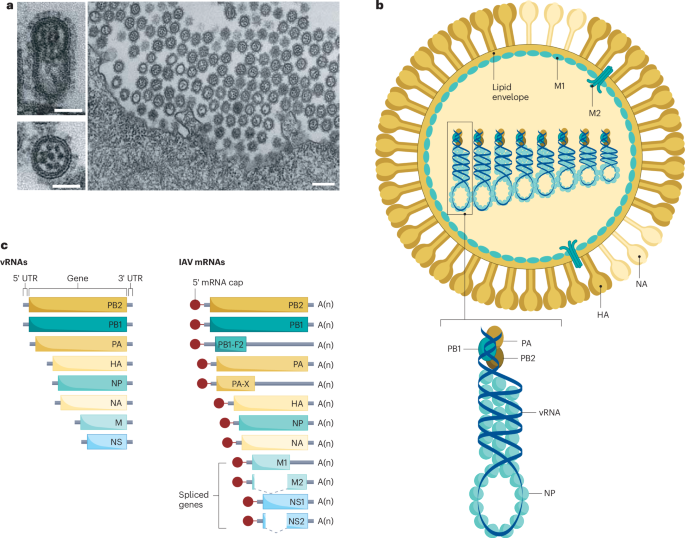
Noda, T. et al. Architecture of ribonucleoprotein complexes in influenza A virus particles. Nature 439, 490–492 (2006).
Krammer, F. et al. Influenza. Nat. Rev. Dis. Primers 4, 3 (2018).
Dou, D., Revol, R., Ostbye, H., Wang, H. & Daniels, R. Influenza A virus cell entry, replication, virion assembly and movement. Front. Immunol. 9, 1581 (2018).